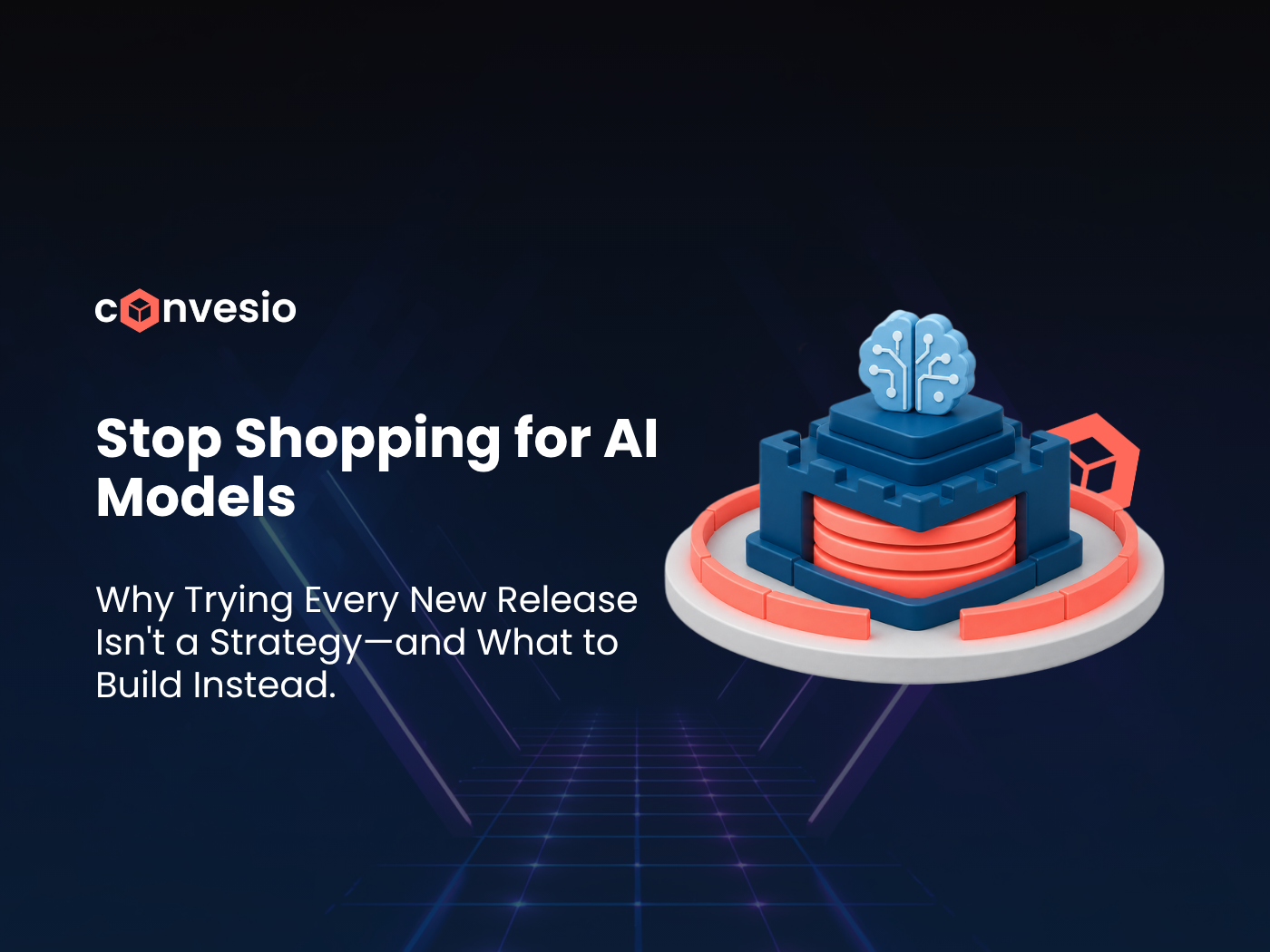
If your team’s AI strategy this year has mostly been “try the new model when it comes out,” you’re not alone, and you’re not behind. Almost everyone is doing this. The problem is that it’s not a strategy. It’s a subscription to whatever’s trending.
A better AI model gets matched by every competitor within a few months of release. A better chatbot, a slicker copy generator, a flashier product recommendation widget: all replicable, all temporary. What doesn’t get replicated overnight is the operational foundation underneath those tools. That’s where the real advantage lives, and it’s buildable starting now, regardless of which model you’re using.
What actually compounds versus what just looks impressive
Here’s the split worth internalizing:
Compounds over time: unified customer data across every channel, a connected view of online and offline purchase behavior, payment history tied to the same customer record as support history, a system that gets richer with every transaction.
Gets matched in months: a chatbot, an AI copywriting tool, an AI-generated product description, a novelty feature that’s genuinely useful but easy for a competitor to bolt on themselves.
None of this means the second category is worthless. It means it shouldn’t be mistaken for a moat. The moat is what’s underneath.
A practical checklist for building it
- Is your customer data actually unified, or just adjacent? If your order history, email engagement, and support tickets live in three different tools that don’t talk to each other, you don’t have a unified customer view. You have three fragments pretending to be one.
- Does online and offline behavior connect? A customer who buys in-store and browses online should be recognized as one person, not two separate records. If they’re not, you’re leaving the richest signal on the table.
- Is your payments data feeding the same picture? Payment behavior, refund patterns, and repeat purchase timing are some of the strongest signals a business can have, and they’re often locked in a payment processor’s dashboard instead of connected to the rest of the customer record.
- Would switching AI tools break anything? If swapping your AI vendor tomorrow would wipe out your progress, the advantage was never really yours. It was rented.
Where Convesio fits
Convesio Commerce exists to answer yes to each of those questions. ConvesioPay connects payment data to the same customer record Convesio Convert is building from every other channel, and Convesio Host keeps the whole system fast and reliable enough to act on that data in real time. Whatever AI tool you plug in on top of it, the foundation stays yours.
The takeaway
Stop treating “which AI model is best” as the strategic question. The strategic question is whether your business has something worth pointing that AI at. Build the moat first. Let the model be whatever it needs to be.